
Can a diabetic eat Italian Seasoning? Benefits, safe Use, and things to watch out for
Yes, a diabetic can eat Italian seasoning. In fact, when used in its pure herb form, Italian seasoning is one of the safest flavor enhancers you can add to a diabetes-friendly kitchen.
Unlike sauces, marinades, or packaged spice blends that may contain hidden sugars or starches, traditional Italian seasoning is simply a mixture of dried herbs. It contains virtually no carbohydrates in normal serving amounts and has no meaningful impact on blood sugar.
The more important question is not whether Italian seasoning is “allowed,” but how to choose the right blend and how it fits into a balanced diabetic eating pattern.
What Is Italian Seasoning Made Of?
Italian seasoning is not a single herb. It is a blend. The exact mix can vary by brand, but most versions include:
- Oregano
- Basil
- Thyme
- Rosemary
- Marjoram
- Sage
All of these are dried leafy herbs. They are used in very small culinary quantities, usually less than one teaspoon per dish.
From a blood sugar perspective, these herbs contribute:
- Negligible carbohydrates
- No added sugars
- No starch in practical servings
- No glycaemic load of concern
Because the serving size is so small, even the tiny natural carbohydrate content of dried herbs does not meaningfully raise glucose levels.
Why Italian Seasoning Is Safe for People With Diabetes
Italian seasoning is considered diabetes-friendly for several reasons.
Extremely Low Carbohydrate Impact
A teaspoon of dried herbs contains only trace amounts of carbohydrate. When distributed across an entire meal, the impact on blood sugar is effectively zero.
This makes Italian seasoning very different from high-carb flavorings such as:
- Sweet chili sauce
- Ketchup with added sugar
- Honey-based marinades
- Bottled pasta sauces
The seasoning itself is not the problem. It is often what it is mixed into that matters more.
Sugar-Free in Pure Form
Pure Italian seasoning does not contain sugar. If the ingredient list only shows dried herbs, it is safe.
However, always read the label. Some commercial blends may include:
- Maltodextrin
- Dextrose
- Anti-caking agents
These are usually present in very small amounts and are unlikely to significantly affect blood sugar in the quantities consumed. Still, choosing a clean, herb-only blend is the best practice for long-term glucose control.
No Glycaemic Spike
Italian seasoning does not contain refined carbohydrates. It has no glycaemic index of practical concern because the carbohydrate content per serving is too low to register.
In contrast, refined grains, sugary drinks, and white bread can cause rapid glucose spikes. Italian seasoning does not belong in that category.
Rich in Plant Compounds
While Italian seasoning is not eaten in large quantities, the herbs it contains are rich in plant compounds and antioxidants.
For example:
- Oregano contains phenolic compounds.
- Rosemary contains rosmarinic acid.
- Basil contains flavonoids.
These compounds support overall health. While they are not a treatment for diabetes, they contribute to a nutrient-dense diet pattern.
Does Italian Seasoning Lower Blood Sugar?
Some herbs have been studied for potential blood sugar benefits. However, Italian seasoning should not be viewed as a glucose-lowering remedy.
Because it is used in small quantities, its primary role is flavor, not metabolic control.
The real value of Italian seasoning for diabetics lies in this:
It helps you reduce reliance on high-sugar sauces and heavy condiments.
When food tastes good because of herbs and spices, there is less temptation to add:
- Sugary dressings
- Sweet glazes
- Refined-carb sides
In that way, Italian seasoning indirectly supports better blood sugar management.
Hidden Risks to Watch For
Italian seasoning itself is safe. The risks come from how it is used or what it is mixed with.
Seasoning Blends With Fillers
Some budget spice blends contain:
- Starches
- Anti-caking agents
- Added flavor enhancers
While the amounts are small, people who are highly sensitive to glucose fluctuations may prefer pure herb blends with no additives.
Look for labels that list only herbs.
Italian Seasoning in Sugary Sauces
The biggest issue is not the seasoning, but the sauce.
For example:
- Jarred pasta sauce may contain added sugar.
- Pizza sauce may include sweeteners.
- Ready-made marinades may contain corn syrup.
In these cases, blood sugar rises due to the sauce, not the herbs.
High-Carbohydrate Meals
If Italian seasoning is sprinkled on:
- White pasta
- Refined flour pizza
- Garlic bread
The spike comes from the refined carbohydrates, not the seasoning.
This distinction is important. The herb blend is neutral. The base food determines the glucose response.
How Diabetics Should Use Italian Seasoning
Italian seasoning can be used freely in everyday cooking. Here are practical ways to include it safely.
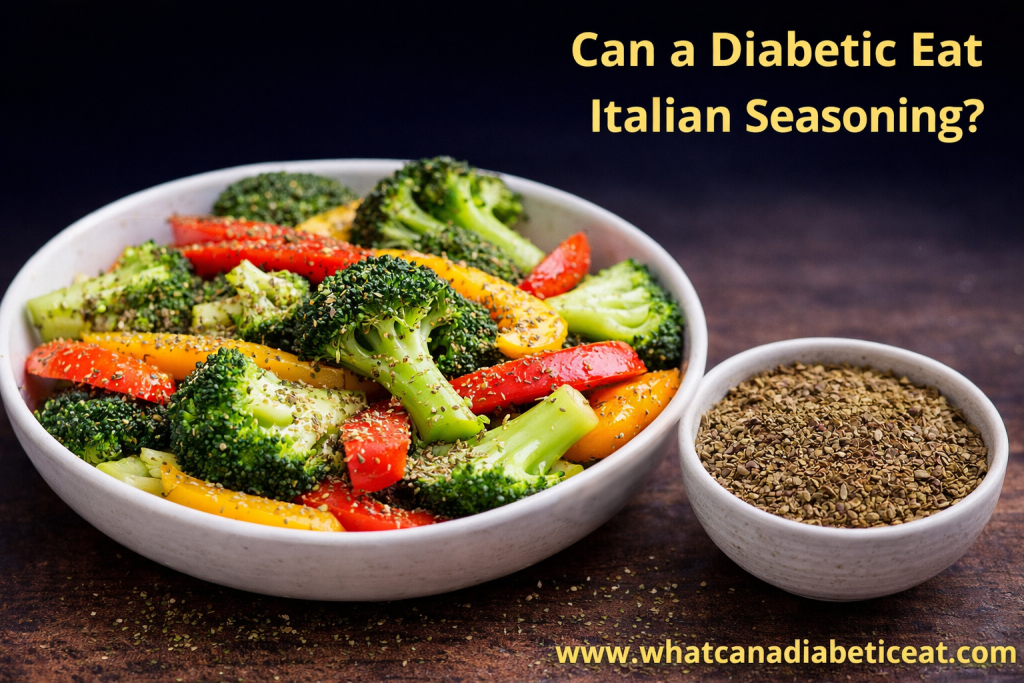
On Non-Starchy Vegetables
Sprinkle it on:
- Zucchini
- Bell peppers
- Eggplant
- Mushrooms
- Broccoli
Roast or sauté with a small amount of olive oil for a flavorful, low-glycaemic side dish.
In Soups and Stews
Add it to:
- Lentil soup
- Bean-based soups
- Vegetable stews
These meals already contain fiber and protein, which help slow digestion and stabilize blood sugar.
On Salads
Mix Italian seasoning into:
- Olive oil and vinegar
- Plain yogurt dressings
- Homemade vinaigrettes
This creates flavor without adding sugar-laden bottled dressings.
On Grilled or Baked Protein Foods
Use it to season:
- Tofu
- Paneer
- Beans
- Lentil patties
Protein-rich foods help moderate blood sugar response when paired with carbohydrates.
Portion Size and Practical Impact
One of the key principles of diabetic eating is portion awareness.
In the case of Italian seasoning, portion size is rarely a concern because:
- It is used in small amounts.
- It contributes minimal calories.
- It contains negligible carbohydrates per serving.
Even if you use a full teaspoon in a dish, the carbohydrate contribution remains extremely low.
There is no realistic scenario in which normal culinary use of Italian seasoning would cause a blood sugar spike.
Comparing Italian Seasoning With Other Flavoring Options
To understand its safety more clearly, compare it with other common flavor enhancers:
| Flavoring | Blood Sugar Impact |
|---|---|
| Italian seasoning | Negligible |
| Table sugar | High |
| Honey | High |
| Sweet barbecue sauce | Moderate to high |
| Plain herbs and spices | Negligible |
This comparison shows why herbs are strongly encouraged in diabetic meal planning.
They increase taste without increasing glycaemic load.
Can Italian Seasoning Be Used Daily?
Yes. There is no restriction on daily use.
Because it is simply dried herbs, it can be part of:
- Lunch
- Dinner
- Meal prep cooking
- Batch-cooked dishes
Rotating herbs and spices is also beneficial for culinary variety and nutrient diversity.
Italian Seasoning and Weight Management
Weight management plays a role in overall glucose control for many people with type 2 diabetes.
Italian seasoning supports weight management indirectly because:
- It adds flavor without calories.
- It reduces reliance on calorie-dense sauces.
- It encourages cooking at home.
Meals prepared with herbs are often lower in added sugars and processed ingredients.
When Should a Diabetic Be Cautious?
Italian seasoning may require attention only in specific situations:
- If the blend contains unexpected additives.
- If it is used in highly processed packaged meals.
- If it triggers heartburn or digestive discomfort in sensitive individuals.
Otherwise, there is no medical reason for most diabetics to avoid it.
How Italian Seasoning Fits Into a Balanced Diabetic Diet
A diabetes-friendly eating pattern focuses on:
- Fiber-rich vegetables
- Moderate portions of whole grains or legumes
- Adequate protein
- Healthy fats
- Minimal refined sugar
Italian seasoning complements this structure.
It enhances meals without changing their carbohydrate profile.
For broader context on how herbs, vegetables, legumes, and grains fit into daily meals, this guide on what a diabetic can eat can help you structure balanced, sustainable eating patterns.
Bottom Line
Italian seasoning is safe for diabetics when it is a pure herb blend with no added sugars or fillers.
It:
- Contains negligible carbohydrates
- Does not cause blood sugar spikes
- Adds flavor without calories
- Supports healthier cooking habits
The seasoning itself is not the issue in diabetic eating. The base ingredients and portion sizes matter far more.
Used wisely, Italian seasoning can be part of everyday cooking without any negative effect on blood glucose control.
Can a Diabetic Eat Italian Seasoning?
Yes, a diabetic can eat Italian seasoning. Italian seasoning is a blend of dried herbs and typically contains no added sugar, no carbohydrates of concern, and no ingredients that raise blood sugar levels when used in normal culinary amounts.
Italian seasoning is commonly made from herbs such as oregano, basil, thyme, rosemary, marjoram, and sage. These herbs are used in very small quantities and contribute flavor without affecting blood glucose.
Why Italian seasoning is safe for diabetics
Italian seasoning is:
- Carbohydrate-free in practical servings
- Sugar-free when pure (no fillers)
- Low glycaemic impact
- Rich in plant compounds that support overall health
Because it is used as a seasoning rather than a food eaten in bulk, it does not cause blood sugar spikes.
Does Italian seasoning contain hidden sugar?
Pure Italian seasoning does not contain sugar.
However, some store-bought blends may include:
- Maltodextrin
- Dextrose
- Anti-caking agents
These are usually present in very small amounts, but it is still wise for diabetics to check the ingredient label and choose a blend made only from dried herbs.
How diabetics should use Italian seasoning
Italian seasoning can be safely used to flavor:
- Vegetables
- Soups
- Salads
- Grilled or sautéed foods
- Homemade sauces
It helps improve taste without needing sugar, honey, or high-carb sauces, which is especially helpful in a diabetic diet.
When Italian seasoning may not be suitable
Italian seasoning may need caution only if:
- It is mixed into processed sauces with sugar
- It is combined with high-carbohydrate foods
- The blend includes added fillers
In its pure herb form, Italian seasoning itself remains diabetes-friendly.
Bottom line
Italian seasoning is safe for diabetics and can be freely used in everyday cooking. Choosing pure, additive-free blends allows diabetics to enjoy flavorful meals without affecting blood sugar control.