.
Why does my blood sugar spike after eating idli (or dosa), even if it feels “light”?
Many people with diabetes find this confusing. Idli is steamed, fermented, and doesn’t taste sweet — yet blood sugar can still rise sharply after eating it.
The key reason is simple: idli is still a carbohydrate-based food, and carbohydrates raise blood glucose more than protein or fat. Even foods that feel “light” can spike sugar depending on portion size, combinations, and individual response.
Short answer
Your blood sugar can spike after idli because:
- Portion size adds up quickly (2–4 idlis = a large carb load)
- Glycemic load matters more than taste
- Side dishes (extra rice-based chutney, potato masala, sweetened coconut chutney, sugary tea/coffee) increase the spike
- Eating idli alone (without enough protein or fibre) leads to faster digestion
Is idli “bad” for diabetics?
No — idli is not automatically bad.
Fermentation and steaming can make idli easier to digest, and it is often lighter than fried foods. However, “can I eat it?” is different from “how much can I eat without spiking?”
Even healthy foods can raise blood sugar if:
- The carbohydrate quantity is high
- The meal is unbalanced
- The portion is large
What exactly causes the spike?
1) Total carbohydrates (the biggest factor)
Rice-based foods break down into glucose. More idlis = more glucose entering the bloodstream.
2) GI vs GL confusion
Many people look only at glycemic index (GI), but glycemic load (GL) also includes portion size.
A moderate-GI food eaten in a large quantity can still cause a big spike.
(You can link internally here to your GI / GL explainer posts.)
3) “Naked carbs”
Eating idli by itself — or mainly with carb-heavy sides — causes faster glucose absorption.
Meals that include protein and fibre usually lead to:
- Slower digestion
- Smaller blood sugar spikes
- Better satiety
4) Timing, sleep, and activity
The same idli breakfast can spike more if:
- You are insulin-resistant in the morning
- You slept poorly
- You are stressed or inactive
This is why patterns matter more than single readings.
How can I eat idli with less blood sugar spike?
1) Reduce portion size (start here)
- If you normally eat 3–4 idlis, try 1–2 idlis
- Mini idlis help with portion control
2) Pair idli with protein and fibre
- Vegetable-heavy sambar
- Protein side such as:
- Plain Greek yogurt (if dairy is okay)
- Paneer or tofu
- Boiled egg
- Sprouts or dal-based sides
3) Make chutney smarter
- Avoid sweetened or sugar-heavy chutneys
- Use small portions of:
- Mint chutney
- Coriander chutney
- Peanut chutney (controlled quantity)
4) Try modified or alternative batters
- Increase lentil proportion (within taste limits)
- Try millet idli (ragi, jowar, bajra) occasionally
- Always test your personal response
5) Use your glucometer (or CGM)
Check your blood sugar after:
- Your usual idli meal
- A balanced idli meal (smaller portion + protein)
Keep the version that works best for you.
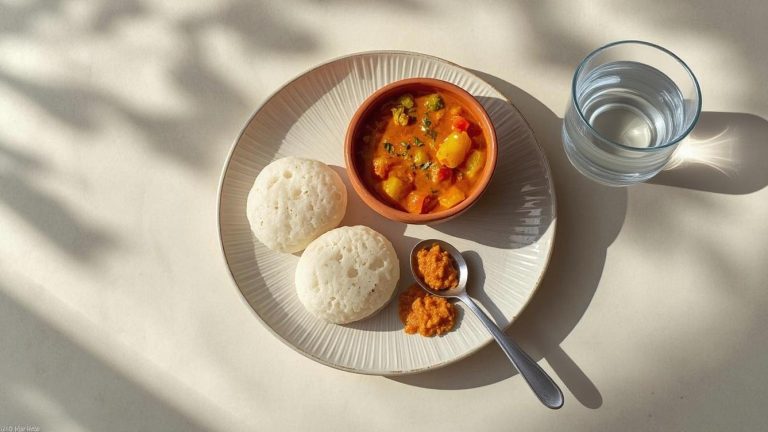
What does a “better” idli meal look like?
Option A (simple)
- 1–2 idlis
- Vegetable-rich sambar
- Small portion of unsweetened chutney
Option B (more filling, often fewer spikes)
- 1–2 idlis
- Vegetable-rich sambar
- Protein side (tofu, paneer, egg, sprouts, or yogurt)
Portion + combination matters more than the food alone.
When should you speak to your doctor?
Talk to your doctor or diabetes educator if:
- You see frequent large spikes
- You experience lows after meals
- You are adjusting insulin or glucose-lowering medication
Disclaimer
This website does not provide medical advice, diagnosis, or treatment.
All information is for educational purposes only.
Please consult your doctor for personalized medical guidance.