
Type 2 diabetes diet sheet: Foods, meal planning, portions, and practical eating guidance
A type 2 diabetes diet sheet provides a practical framework for planning everyday meals without requiring a rigid list of foods to eat or avoid. It can help organise food groups, carbohydrate portions and meal structure in a way that is easier to use from day to day.
There is no single meal plan that is right for everyone with type 2 diabetes. Food preferences, culture, activity, medications, nutritional needs and other health considerations can all influence what works for an individual.
This guide provides a practical starting point, including suitable food choices, portion guidance, a simple plate method, meal ideas and a repeatable daily structure. For the principles behind these choices, see diet guidance for diabetics. For help comparing individual foods and products, see food choices for diabetics.
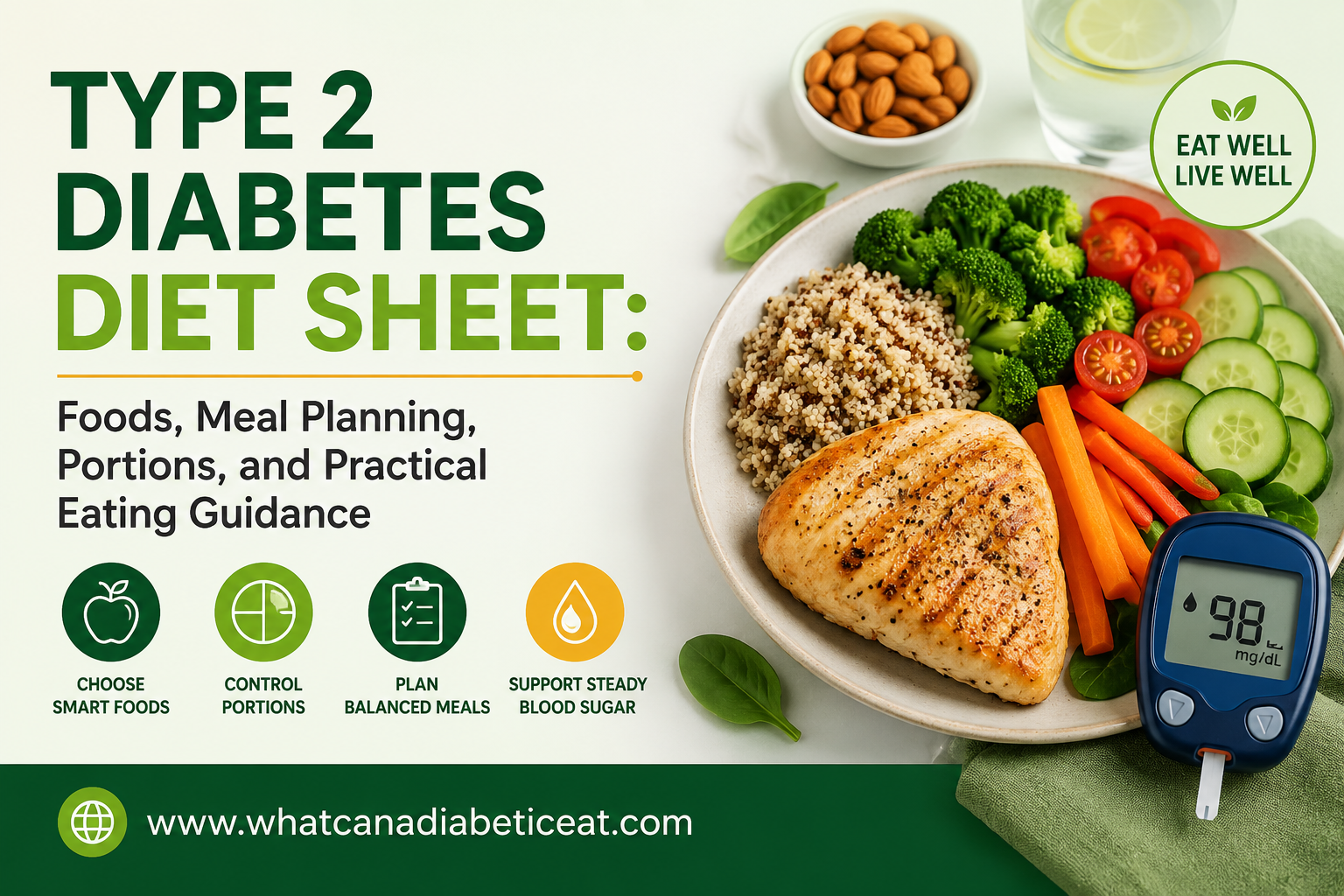
Use a simple type 2 diabetes diet sheet to organise food groups, portions and everyday meals without relying on unnecessarily restrictive food rules.
Explore our diabetes food guides
What is a type 2 diabetes diet sheet?
A type 2 diabetes diet sheet is a practical meal-planning tool rather than a prescribed diet. It can provide a simple structure for deciding what to include in meals, how carbohydrate-containing foods fit and how portions can be adjusted.
A useful diet sheet should be flexible enough to accommodate different cuisines, preferences and eating routines. It should also help translate general nutrition advice into decisions that can actually be used at breakfast, lunch, dinner and between meals.
Why structured meal planning can simplify diabetic eating
Planning a basic meal structure in advance can reduce the number of food decisions that need to be made each day. A familiar breakfast, a few reliable lunch and dinner combinations, and suitable foods kept available for snacks can make everyday eating easier to organise.
Structure does not mean eating identical meals every day. The foods, cuisines and recipes can change while the underlying proportions and food groups remain similar.
A practical plan can also make shopping and food preparation easier because meals can be built around ingredients that are already available. Diet guidance for diabetics explains the broader principles behind meal structure and eating patterns.
Keeping a type 2 diabetes diet sheet flexible
A useful diet sheet should provide structure without prescribing the same foods, portions or meal schedule for everyone. The basic framework can be adapted to different cuisines, vegetarian or mixed diets, family meals and individual food preferences.
Flexibility also matters because nutritional needs and daily routines can change. Work, school, travel, activity and appetite may all affect when and how meals are eaten, while some medications can create additional considerations around meal timing or carbohydrate intake.
The aim is to use the diet sheet as a practical reference rather than a fixed menu. The same broad principles can be applied to different foods and meals, allowing the eating pattern to remain nutritionally useful and realistic over time.
A practical type 2 diabetes diet sheet should ultimately make everyday eating decisions easier rather than create fear around individual foods or meals. Clear meal-planning principles can provide a useful starting point while still allowing meals to be adapted to personal needs, preferences and everyday life.
The next step is to look at the foods, portions and other practical elements that can form part of that structure.
What should a type 2 diabetes diet sheet include?
A useful type 2 diabetes diet sheet should provide enough structure to guide meals without turning eating into a complicated set of rules. The main elements are usually food variety, appropriate carbohydrate portions, vegetables and other fibre-rich foods, protein foods, healthier sources of fat and practical portion awareness.
The exact foods can vary considerably. A meal based on rice and lentils, for example, can use the same broad principles as one based on potatoes and fish or a wholegrain dish with tofu and vegetables.
Foods to include in a type 2 diabetes diet sheet
A type 2 diabetes diet can include foods from all the major food groups. Useful everyday choices can include:
- Non-starchy vegetables
- Wholegrain and higher-fibre grain foods
- Beans, lentils, chickpeas and other pulses
- Fruit
- Milk, yoghurt and other dairy foods or alternatives
- Nuts and seeds
- Eggs, fish, poultry, tofu and other protein foods
- Unsaturated oils and other sources of unsaturated fat
These foods do not need to appear at every meal, and individual portions will vary.
The balance between these food groups does not need to be identical at every meal. Some meals may contain several groups together, while others may be simpler. What matters is building variety across the wider eating pattern and considering portions, particularly for carbohydrate-containing foods.
Use vegetables for diabetics, grains for diabetics, legumes and pulses for diabetics, fruits for diabetics, dairy for diabetics, nuts for diabetics, seeds for diabetics and fats and oils for diabetics for detailed guidance on individual food groups.
Why portion control matters in type 2 diabetes
Portion size matters because it determines how much carbohydrate, energy and other nutrients are eaten at one time. This is particularly relevant for carbohydrate-rich foods such as rice, bread, pasta, potatoes, cereals and fruit.
Portion awareness does not mean every food needs to be weighed or measured indefinitely. Familiar serving sizes, the plate method and food labels can all provide practical ways to estimate portions.
The appropriate amount varies between people and can depend on nutritional needs, activity, medications and the rest of the meal. A portion that works well for one person may therefore not be the right amount for another.
Portion awareness is also relevant to nutritious foods. Whole grains, fruit, legumes and dairy foods can all contribute valuable nutrients, but their carbohydrate contribution still depends partly on how much is eaten. Rather than assuming that a nutritious food can be eaten without regard to quantity, consider both the food and the portion.
Build meals without unnecessary restriction
Type 2 diabetes does not automatically require eliminating all carbohydrate-containing foods. Whole grains, legumes, fruit, dairy foods and starchy vegetables can provide useful nutrients as well as carbohydrate.
A practical diet sheet should therefore help manage portions and food choices rather than divide every food into “allowed” and “forbidden” categories.
Foods high in added sugars, highly refined carbohydrates, saturated fat or sodium may be better eaten less often, but this is different from banning entire food groups. Frequency, portion size and the overall eating pattern can all affect how an individual food fits.
A practical diet sheet should therefore make room for everyday nutritious choices without presenting occasional foods as failures. Foods to avoid with diabetes explains which foods and drinks commonly deserve more attention and why.
A useful type 2 diabetes diet sheet therefore brings together food variety, portion awareness and flexibility rather than relying on a rigid list of permitted and forbidden foods. The aim is to provide enough structure to guide everyday choices while leaving room for different foods, cuisines and individual needs.
Once the main foods and portions are understood, a visual plate structure can provide a simple way to put these principles into practice.
The simplest diabetic plate method
A plate method provides a visual way to organise a meal without calculating every nutrient. One commonly used approach is to divide the plate approximately into:
- Half non-starchy vegetables
- One quarter protein foods
- One quarter carbohydrate foods
Water or another unsweetened drink can accompany the meal. Fruit, dairy foods or other additions can be included according to individual needs and the rest of the meal.
The plate method is a flexible guide rather than a rule. Mixed dishes, traditional meals and foods that combine carbohydrate and protein do not always divide neatly into separate sections.
Balancing vegetables, protein and carbohydrates
Non-starchy vegetables can occupy a substantial part of the plate because they generally provide fibre, vitamins and minerals with relatively little carbohydrate. Examples include leafy greens, broccoli, cauliflower, peppers, cucumber, tomatoes and okra.
Protein foods can include beans, lentils, tofu, eggs, fish, poultry, yoghurt and other choices according to preference. Carbohydrate foods may include rice, bread, pasta, potatoes, grains, fruit or other foods appropriate to the meal.
The proportions provide a practical starting point rather than a precise formula for every meal. Foods such as beans, lentils and yoghurt also contribute nutrients from more than one category, so meals do not always divide neatly into separate food groups.
The amount and type of carbohydrate can influence blood glucose, but the appropriate portion differs between individuals. Vegetables for diabetics and grains for diabetics provide more detailed food-specific guidance.
Choosing the carbohydrate portion
The carbohydrate part of a meal can come from many different foods, including rice, bread, pasta, potatoes, other grains, legumes and some dairy foods. Fruit also contains carbohydrate and may be included with a meal or eaten separately depending on preference and individual needs.
The appropriate portion is not the same for everyone. The amount of carbohydrate in the food, the serving size, activity, medications and individual nutritional needs can all be relevant when deciding how much to include.
Higher-fibre carbohydrate foods such as whole grains and legumes can contribute useful nutrients, but portion size still matters. Likewise, refined carbohydrate foods do not automatically have to be excluded simply because they are refined. The type of food and the amount eaten should be considered together.
A diet sheet can therefore show where carbohydrate foods fit without prescribing one universal serving size. Grains for diabetics and legumes and pulses for diabetics provide more detailed guidance on common carbohydrate-containing foods.
Why visual meal structure helps many people
A visual meal structure can be easier to use than weighing and calculating every ingredient. It provides a starting point for portions while still allowing meals to reflect different cuisines, recipes and preferences.
It can also be adapted to mixed meals. A curry with rice, a pasta dish or a bowl containing several ingredients does not need to be physically separated into quarters for the underlying principle to remain useful.
The plate method is only one planning tool, and it does not need to be followed literally at every meal. Its main value is providing a simple visual reference that can be adapted to different foods, mixed dishes and eating situations.
People who use carbohydrate counting, insulin-to-carbohydrate ratios or another approach recommended by their healthcare team should continue to follow their individual plan rather than replacing it with the plate method.
The plate method can therefore provide a practical starting point for organising vegetables, protein foods and carbohydrate foods without requiring every meal to be weighed or calculated. Its flexibility also means the same principles can be adapted to mixed dishes, different cuisines and individual portion needs.
The same basic structure can then be applied across the day, beginning with breakfast, rather than requiring completely different nutritional rules for each meal.
Breakfast meal structure ideas
Breakfast can follow the same basic principles as other meals: choose an appropriate carbohydrate portion and include foods that contribute useful protein, fibre or other nutrients according to the meal.
Examples include:
- Oats with plain yoghurt, nuts or seeds
- Eggs or tofu with vegetables and wholegrain toast
- Plain yoghurt with fruit and seeds
- A lentil-based breakfast with vegetables
- Wholegrain toast with a suitable topping
Breakfast does not need to follow a particular cuisine or contain traditional “breakfast foods”. Breakfast for diabetics provides more detailed food choices and meal ideas.
Choosing carbohydrate foods at breakfast
Breakfast carbohydrate can come from foods such as oats, breakfast cereals, bread, fruit, milk and yoghurt, as well as grain or pulse-based dishes used in different cuisines. These foods vary in their carbohydrate, fibre and overall nutritional profile, so breakfast does not need to centre on one particular type of carbohydrate food.
Wholegrain and higher-fibre choices can be useful ways to increase fibre intake. Examples include oats, wholegrain bread and higher-fibre cereals, although the individual product and portion still matter.
Breakfast does not need to be carbohydrate-free, nor does every carbohydrate food need to be replaced with a lower-carbohydrate alternative. The amount eaten and the overall nutritional value of the meal are more useful considerations than treating carbohydrate as something that must always be avoided.
Grains for diabetics provides more detailed guidance on oats, bread, cereals and other grain foods, while fruits for diabetics covers fruit portions and different forms of fruit.
Adding protein, fibre and other nutrients
Breakfast can also include foods that contribute protein, fibre, unsaturated fats, vitamins and minerals. Depending on the meal, these might include eggs, plain yoghurt, tofu, nuts, seeds, fruit, vegetables, beans or lentils.
There is no requirement to include every nutrient or food group at breakfast. A simple meal such as oats with yoghurt and fruit may look very different from eggs with vegetables and toast or a lentil-based breakfast, while each can still contribute useful nutrients to the wider diet.
Rather than relying on a formula that every breakfast must contain a particular combination of foods, consider what the meal contributes overall and how it fits with the rest of the day. This allows breakfast to remain practical and culturally flexible without turning meal planning into another set of rigid rules.
Dairy for diabetics, nuts for diabetics and seeds for diabetics provide more detailed guidance on these individual food groups.
Adjusting breakfast portions
Breakfast portions can be adjusted according to appetite, activity, medications and individual blood glucose response. Foods such as cereal, oats, bread, fruit and milk contribute carbohydrate, so the amount eaten can be considered as part of the complete meal.
Portion needs can also differ according to what the breakfast contains. A breakfast built around oats and fruit, for example, will have a different carbohydrate profile from eggs with vegetables and a slice of toast. Looking at the foods and portions together provides a more useful picture than applying the same serving size to every breakfast.
Packaged cereals, flavoured yoghurts, breakfast bars and drinks can vary considerably in added sugar, carbohydrate, fibre and portion size. Comparing labels between similar products can help identify differences that may not be obvious from the front of the pack.
Portions can also be adjusted without changing the entire breakfast. For example, the amount of cereal, oats, bread or fruit can be considered alongside the other foods in the meal rather than assuming that one standard serving is appropriate for everyone.
A practical breakfast does not need to follow one fixed formula. Different carbohydrate foods, protein foods, fruit, vegetables, dairy foods, nuts and seeds can all be used according to preference, with portions adjusted to individual needs.
The same principles of food variety, portion awareness and flexibility can then be carried into lunch and dinner, where an even wider range of foods and mixed meals may be used.
Lunch and dinner meal structure ideas
Lunch and dinner can use the same basic plate framework while allowing considerable variation in ingredients and cuisine.
Examples include:
- Lentils or beans with vegetables and an appropriate rice or bread portion
- Fish, tofu, eggs or poultry with vegetables and potatoes or whole grains
- Vegetable-based soups with beans, lentils or another protein food
- Salads containing vegetables, a protein food and an appropriate carbohydrate source
- Stir-fries with vegetables, a protein food and an appropriate rice or noodle portion
Mixed dishes can also fit. The aim is not to make every plate look identical but to consider the main ingredients and approximate portions.
Building a practical lunch or dinner
A practical lunch or dinner can be built around vegetables, a protein food and an appropriate portion of carbohydrate-containing food, but these components do not need to appear as separate items on the plate. Soups, curries, stews, pasta dishes, salads and other mixed meals can combine several food groups in one dish.
The proportions can also vary according to the meal. Rice, bread, pasta, potatoes and other carbohydrate foods may form part of the meal alongside vegetables and foods such as beans, lentils, tofu, eggs, fish or poultry. Portion size and the overall composition of the meal are more useful considerations than trying to make every lunch or dinner look identical.
Cooking methods and accompaniments can also influence the nutritional profile of a meal. Grilling, baking, steaming, roasting and stir-frying are among the many ways foods can be prepared, while sauces, dressings and condiments can contribute additional sugar, sodium, fat or carbohydrate depending on the ingredients and amount used.
There is no need for lunch and dinner to follow a particular cuisine or set of recipes. The same broad meal-planning principles can be applied to familiar foods from different cultures while allowing ingredients, flavours and preparation methods to vary.
Adapting familiar meals
Familiar meals often need adjustment rather than replacement. This might mean changing the proportion of rice, bread or another carbohydrate food, adding more non-starchy vegetables, choosing a different cooking method or adjusting sauces and accompaniments.
Small changes can preserve the character of a familiar meal while altering its overall nutritional profile. A curry, pasta dish, rice meal, sandwich, soup or family recipe does not need to be replaced simply because someone has type 2 diabetes. The aim is to consider the ingredients and portions that make up the meal and adjust them where useful.
These principles can be applied to cuisines from around the world. Traditional and culturally familiar foods can remain part of the eating pattern, and there is no requirement for a diabetes-friendly meal to be based on a particular national diet or set of recipes.
Where a familiar meal contains several carbohydrate foods, or particularly large portions of one carbohydrate food, the amounts can be considered in the context of the whole meal. Food choices for diabetics provides further guidance on making practical adjustments and healthier swaps without unnecessarily excluding familiar foods.
Eating away from home
Restaurant and takeaway meals can be harder to estimate because portions and ingredients are not always known. Where practical, consider the main carbohydrate source, vegetables, protein foods, cooking method and approximate portion rather than trying to calculate every ingredient precisely.
Menus may also provide useful clues about preparation methods, sauces, sides and portion sizes. Depending on the meal, practical options might include choosing additional vegetables, adjusting a carbohydrate-rich side, sharing a large portion or selecting sauces and dressings separately when this suits the meal.
An occasional restaurant or takeaway meal does not need to match the diet sheet perfectly. What matters more is how eating away from home fits into the wider eating pattern and whether the choices made regularly remain appropriate for individual needs.
Planning ahead can be useful when nutritional information or menus are available, but eating away from home should not require rigid rules. Food choices for diabetics provides more detailed guidance on eating out, comparing options and making practical food choices.
Lunch and dinner can therefore follow the same basic principles while allowing considerable variation in foods, cuisines and eating situations. Building meals around appropriate portions and a varied range of foods can provide structure without requiring familiar dishes to be abandoned.
Once these meal-building principles are understood, they can be brought together into a simple daily framework showing how breakfast, lunch, dinner, optional snacks and drinks might fit across the day.
Example type 2 diabetes daily diet sheet
The example below shows how the principles in this guide can be organised across a day. It is an illustrative framework rather than a prescribed meal plan, and portions should be adapted to individual needs.
The foods themselves can be changed according to preference, culture and what is available. The purpose of the diet sheet is to show how different food groups can fit together across the day, not to suggest that everyone with type 2 diabetes should eat the same meals.
| Meal | Example structure | Example |
|---|---|---|
| Breakfast | Wholegrain or higher-fibre carbohydrate + protein food + fruit or vegetables | Oats with plain yoghurt, berries and seeds |
| Lunch | Non-starchy vegetables + protein food + appropriate carbohydrate portion | Lentil and vegetable dish with an appropriate portion of brown rice |
| Dinner | Non-starchy vegetables + protein food + appropriate carbohydrate portion | Baked fish or tofu with mixed vegetables and potatoes |
| Snack, if needed | Fruit, plain yoghurt, nuts, seeds, vegetables or another suitable choice | A piece of fruit with a small portion of nuts, or plain yoghurt |
| Drinks | Water and unsweetened drinks as everyday choices | Water, unsweetened tea or coffee |
Not everyone needs snacks, and meal timing does not need to be identical for everyone. People using glucose-lowering medicines that can cause hypoglycaemia may have specific meal and carbohydrate requirements and should follow the advice provided by their healthcare team.
The example meals can also be adapted rather than copied exactly. Brown rice could be replaced with another grain or appropriate carbohydrate food, fish or tofu with another protein food, and the vegetables changed according to preference or cuisine. The structure is intended to make meal planning easier while leaving room for variety.
A daily diet sheet becomes more useful when its basic structure can be repeated with different foods rather than requiring a completely new plan each day. Keeping the framework familiar while changing ingredients and meals can provide both structure and variety.
The next step is to turn that framework into an everyday routine that remains practical when schedules, meals and circumstances change.
Building repeatable daily eating routines
A diet sheet becomes useful when it can be applied repeatedly without making eating unnecessarily complicated. Keeping a few reliable meal combinations, planning shopping around commonly used ingredients and preparing some foods in advance can reduce day-to-day decision making.
Routines should remain flexible. Work schedules, family meals, cultural occasions, travel and appetite can all change when and how people eat.
Planning a few reliable meals
Having a small selection of familiar breakfasts, lunches and dinners can make everyday meal planning easier. These do not need to be identical meals. The basic structure can remain familiar while vegetables, grains, protein foods, flavours and recipes change.
Reliable meal options can also help when there is limited time to decide what to eat. Knowing a few meals that are practical, enjoyable and easy to prepare can reduce reliance on last-minute choices without requiring a rigid weekly menu.
Variety can still come from changing ingredients within the same basic meal structure. For example, different vegetables, grains, legumes, protein foods, herbs and spices can be used while the overall approach to portions remains familiar.
The aim is not to create a list of compulsory meals, but to develop several dependable options that can be used when useful and changed when preferences or circumstances change.
Shopping and preparing ahead
A simple shopping plan can make the diet sheet easier to use in practice. Keeping commonly used vegetables, carbohydrate foods, protein foods and other useful ingredients available makes it easier to assemble meals without having to plan every meal from the beginning.
Some preparation can also be done ahead where practical. Washing or chopping vegetables, cooking grains or pulses, portioning foods or preparing part of a meal in advance can reduce the work needed later in the day.
Planning ahead does not require preparing every meal for the week or following a fixed meal-preparation routine. The amount of preparation that is useful will depend on available time, storage, household needs and personal preference.
Shopping lists can also remain flexible. Keeping a core group of useful ingredients available while varying fresh foods, recipes and flavours can support both convenience and dietary variety.
Adapting routines when daily life changes
Eating routines are not always predictable. Work or school schedules, travel, weekends, family meals, social occasions and changes in appetite can all affect when and what someone eats.
A flexible diet sheet can help in these situations by providing broad meal-building principles rather than requiring meals to be eaten at exactly the same time or prepared in exactly the same way each day.
When routines change, the aim can be to adapt the usual framework to the situation rather than abandon it completely. A meal eaten away from home, for example, can still be considered in terms of its main foods and approximate portions even when the exact ingredients are unknown.
People whose medication requires particular attention to meal timing or carbohydrate intake should follow their individual healthcare advice when changing their usual eating routine.
A practical diet sheet should function as a flexible framework rather than a test that has been passed or failed when an individual meal differs from the plan. Reliable meals, basic shopping and preparation habits, and the ability to adapt to changing routines can make it easier to use over time without demanding perfect consistency.
Frequently asked questions about type 2 diabetes diet sheets
These common questions cover carbohydrates, portions, meal structure and practical ways to use a type 2 diabetes diet sheet. They provide general guidance rather than individual carbohydrate targets or prescribed meal plans.
Can people with type 2 diabetes eat carbohydrates?
Yes. Having type 2 diabetes does not mean that carbohydrate-containing foods need to be eliminated. Foods such as whole grains, bread, rice, pasta, potatoes, legumes, fruit, milk and yoghurt can all contribute carbohydrate while also providing different combinations of fibre, protein, vitamins and minerals.
The type of food and the amount eaten both matter. Carbohydrate needs can also vary between individuals, particularly according to activity, medications and overall nutritional requirements. A practical diet sheet can help organise carbohydrate-containing foods within meals rather than treating all carbohydrates as foods to avoid.
What foods should be included in a type 2 diabetes diet?
A varied type 2 diabetes diet can include non-starchy vegetables, wholegrain and higher-fibre foods, beans and other pulses, fruit, dairy foods or alternatives, nuts, seeds, eggs, fish, poultry, tofu and other protein foods. Unsaturated oils and other sources of unsaturated fat can also form part of the wider eating pattern.
The exact combination does not need to be the same for everyone or at every meal. Different cuisines and eating preferences can use different foods while following similar principles around variety, portions and overall nutritional quality. The individual food-group guides below provide more detailed guidance on particular choices.
What foods should people with type 2 diabetes limit?
Foods and drinks high in added sugars, highly refined carbohydrates, saturated fat or sodium may be better eaten less often or in smaller amounts. Examples can include sugar-sweetened drinks, confectionery, some baked foods, heavily processed snack foods and some fried foods.
This does not mean that every food in these categories must be completely avoided. Frequency, portion size and the wider eating pattern all matter. Foods to avoid with diabetes explains which foods and drinks commonly deserve more attention and suggests practical alternatives.
Do people with type 2 diabetes need to avoid sugar completely?
No. Type 2 diabetes does not mean that all sugar must be completely excluded. Foods and drinks high in added sugars can contribute substantial carbohydrate and may provide relatively little nutritional value, so they are generally better eaten less often or in smaller amounts.
Sugar also occurs naturally in foods such as fruit and milk, which can provide fibre, protein, vitamins, minerals or other useful nutrients. It is therefore more helpful to consider the food as a whole, the portion and the wider eating pattern rather than treating every source of sugar in the same way.
How much carbohydrate should a person with type 2 diabetes eat?
There is no single amount of carbohydrate that is appropriate for everyone with type 2 diabetes. Individual needs can vary according to overall energy requirements, activity, medications, food preferences and other health considerations.
Carbohydrate can come from grains, bread, rice, pasta, potatoes, legumes, fruit, milk and yoghurt as well as foods and drinks containing added sugars. Both the type of food and the portion contribute to overall carbohydrate intake. People who need an individual carbohydrate target should discuss this with an appropriate healthcare professional.
What is the plate method for type 2 diabetes?
The plate method is a visual way to organise a meal without having to calculate every nutrient. A common approach is to use approximately half the plate for non-starchy vegetables, one quarter for protein foods and one quarter for carbohydrate foods.
These proportions are a practical starting point rather than a rule that every meal must follow exactly. Mixed dishes and foods from different cuisines may not divide neatly into separate sections, and individual portion requirements can vary. The plate method can still provide a useful visual framework that is adapted to the meal.
Do people with type 2 diabetes need to eat at fixed times?
Not necessarily. There is no single meal schedule that everyone with type 2 diabetes needs to follow. Meal timing can depend on appetite, work or school schedules, activity, cultural eating patterns, medications and personal preference.
Some glucose-lowering medicines can make meal timing or carbohydrate intake particularly important because of the risk of hypoglycaemia. People using these medicines should follow the individual advice provided by their healthcare team rather than changing their meal schedule solely to match a general diet sheet.
Are snacks necessary with type 2 diabetes?
Not everyone with type 2 diabetes needs snacks. Some people may prefer three main meals, while others may include snacks because of hunger, activity, a long interval between meals or individual medication requirements.
When a snack is wanted, options might include fruit, plain yoghurt, nuts, seeds, vegetables or another food that fits the person’s wider eating pattern. Portion size still matters, and snacks do not need to be added simply because someone has diabetes.
Can a type 2 diabetes diet sheet be used for different cuisines?
Yes. A type 2 diabetes diet sheet should be flexible enough to work with different cuisines, cultural food traditions and personal preferences. The principles do not depend on eating a particular set of Western foods or following one standard menu.
Rice, breads, grains, pulses, vegetables, fish, meat, tofu, dairy foods, herbs, spices and other familiar ingredients can be incorporated according to the cuisine. The practical task is to consider the foods, approximate portions and overall meal structure while preserving meals that are familiar and enjoyable.
A type 2 diabetes diet sheet can provide a useful starting point, but it does not need to prescribe the same foods, carbohydrate intake, meal timing or snack pattern for everyone. The framework can be adapted to individual needs while keeping the basic principles of varied food choices, appropriate portions and practical meal planning in place.
For more detailed information about individual foods and broader eating patterns, the related guides below explore each part of diabetes-friendly eating in greater depth.
Related diabetes food guides
A type 2 diabetes diet sheet can provide a practical framework for meal planning, but it is only one part of building a healthy diabetes-friendly eating pattern. Explore the guides below for more detailed information about fruits for diabetics, vegetables for diabetics, grains for diabetics, dairy for diabetics, nuts for diabetics, seeds for diabetics, legumes and pulses for diabetics, fats and oils for diabetics, condiments for diabetics, herbs for diabetics, spices for diabetics, sweeteners for diabetics, drinks for diabetics and breakfast for diabetics.
You can also explore broader guidance on the best diabetic diet, food choices for diabetics, diet guidance for diabetics and foods to avoid with diabetes. The diabetic food guide provides a food-group reference, while what can a diabetic eat? brings everything together in the site’s master guide.
What can a diabetic eat?
Start with the master guide to diabetic eating, covering food groups, balanced meals, meal planning and clear pathways to every detailed food guide.
Best diabetic diet
Compare different approaches to diabetes-friendly eating, including Mediterranean-style and lower-carbohydrate patterns, with food quality, portions, sustainability and individual needs in mind.
Diabetic food guide
Use a complete food reference organised by food group, with concise category summaries and links to detailed guides on foods and food types.
Diet guidance for diabetics
Learn practical daily eating principles, including balanced meals, carbohydrate choices, portions, meal structure and sustainable diabetes-friendly eating habits.
Food choices for diabetics
Make better everyday decisions through guidance on shopping, food labels, product comparisons, healthier swaps, eating out and balancing meals.
Foods to avoid with diabetes
Identify foods and drinks commonly worth limiting, understand why they may affect blood sugar or health and find more balanced alternatives.
Breakfast for diabetics
Explore healthy breakfast foods and practical meal ideas, including higher-protein, lower-carbohydrate, quick and grab-and-go options for balanced mornings.
Condiments for diabetics
Compare sauces, spreads, dressings and seasonings, with guidance on added sugar, salt, portions and practical diabetes-friendly choices.
Dairy for diabetics
Compare milk, yoghurt, cheese and dairy alternatives, considering carbohydrates, added sugar, protein, saturated fat and suitable portions.
Drinks for diabetics
Compare water, tea, coffee, milk, juices, smoothies, sweetened drinks and alcohol, with guidance on hydration and healthier beverage choices.
Fats and oils for diabetics
Compare cooking oils and fats, with guidance on unsaturated and saturated fats, portions, cooking methods and heart health.
Fruits for diabetics
Compare suitable fruits, serving sizes and glycaemic impact, with guidance on fresh, frozen, canned and dried fruit and practical portions.
Grains for diabetics
Explore rice, oats, barley, quinoa, bread, pasta and cereals, with guidance on whole versus refined grains, serving sizes and portions.
Herbs for diabetics
Explore basil, coriander, mint, parsley, oregano and other herbs, including fresh and dried forms and practical ways to use them.
Legumes and pulses for diabetics
Learn about beans, lentils, chickpeas and peas, including their fibre, protein and carbohydrate content, portions and practical meal ideas.
Nuts for diabetics
Compare individual nuts, their healthy fats and nutrients, suitable portions and varieties without excessive salt, sugar or added coatings.
Seeds for diabetics
Learn about chia, flax, pumpkin, sunflower and sesame seeds, including their nutrition, portions and simple uses in meals and snacks.
Spices for diabetics
Explore cinnamon, turmeric, ginger, cumin, black pepper and other spices, with guidance on everyday use, blends and blood sugar considerations.
Sweeteners for diabetics
Compare stevia, monk fruit, sugar alcohols, artificial sweeteners and other alternatives, including blood sugar considerations, limitations and everyday use.
Vegetables for diabetics
Compare non-starchy and starchy vegetables, their fibre and carbohydrate content, suitable portions, cooking methods and meal ideas.
These guides can help you use the type 2 diabetes diet sheet alongside more detailed guidance on individual foods and food groups. Use them to compare everyday options, understand portions and meal combinations, explore alternatives, and turn the practical framework into an eating pattern that works for you.
Final takeaway
A type 2 diabetes diet sheet can provide a simple framework for turning general nutrition guidance into everyday meals. Vegetables, protein foods, carbohydrate-containing foods, fruit, dairy foods, nuts, seeds and healthier sources of fat can all have a place, with portions adapted to individual needs.
The plate method can provide a useful visual starting point, while a small number of repeatable meal structures can make shopping, preparation and portion decisions easier. The framework can be adapted to different cuisines, schedules and preferences rather than requiring everyone to follow the same menu.
Individual requirements can differ, particularly for people using medications that affect blood glucose or those with additional nutritional or health needs. Diet guidance for diabetics explains the broader principles behind meal planning, while food choices for diabetics helps with everyday food and product decisions.
The example daily diet sheet provides a starting framework rather than a prescribed menu. Its meal structures can be repeated with different ingredients, portions and cuisines, making it possible to retain variety while using the same practical principles from day to day.
For a complete overview of individual foods and food groups, continue with what can a diabetic eat?